

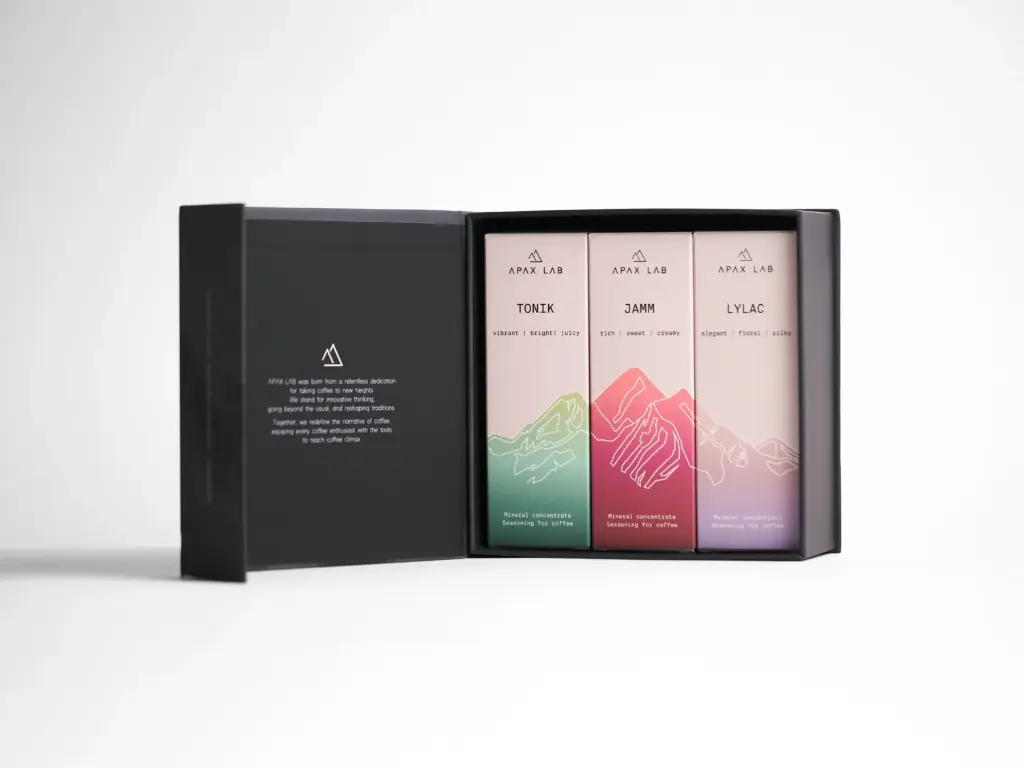
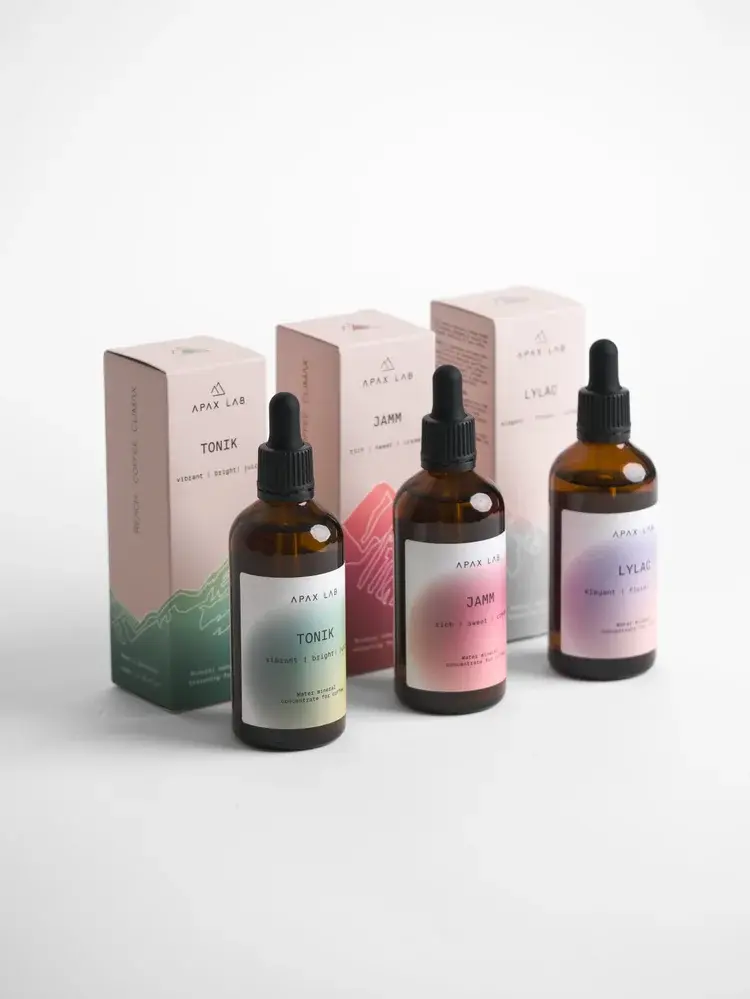
Apax Mineral Drops
Enhance your brew
💧🧪☕ APAX Mineral Concentrates — “recipe-ready” water chemistry for better coffee
APAX Mineral Drops are an easy, highly repeatable way to optimize your brewing water — without needing to build complex mineral recipes from scratch. If you want great results fast (and consistent), APAX is made for you.
Think of APAX as pre-formed water “profiles”: each formula is a carefully balanced mineral concentrate designed to push the cup in a specific direction — more vibrant, more floral, more sweet, or more lush.
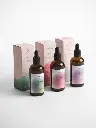
What’s in the APAX Core Box Set
⚡ Tonik
Adds vibrancy and acidity — great when a coffee tastes flat, muted, or lacks sparkle.
🌸 Lylac
Highlights florals and adds elegance — perfect for washed Ethiopians, Geshas, and tea-like coffees.
🍓 Jamm
Enhances sweetness and ripeness — ideal for naturals, co-ferments, and coffees with berry or stonefruit notes.
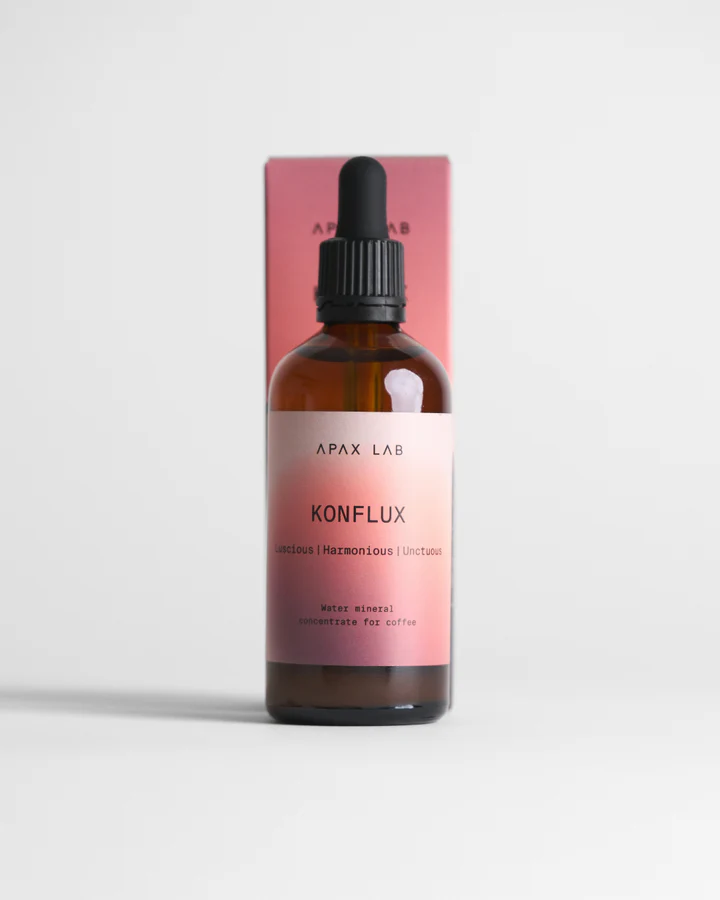
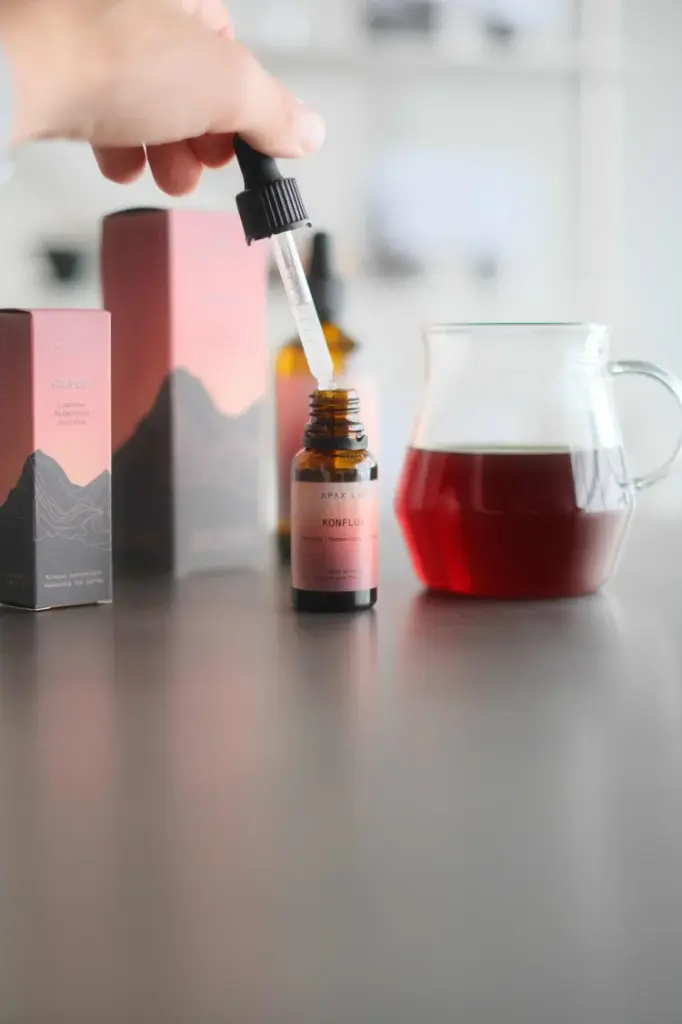
⭐ KONFLUX (2025 Brewers’ Cup inspired)
KONFLUX is the newest APAX formula, devised for the 2025 World Brewers’ Cup style of brewing. It’s designed to enhance mouthfeel and lusciousness — and for many coffees it’s the “wow, this feels richer” button.
the CoffeeNose's take 👃: If you love a cup that feels silky, round, and layered, KONFLUX is the one you’ll reach for most.
⚖️ How to use APAX Mineral Concentrates
- Shake the bottle thoroughly before each use.
-
Dose either:
- 3–4 g per liter into your brew water (best for repeatability), or
- 1–10 drops directly into your brewed coffee (200 ml cup) to quickly test flavour direction.
- For the best control, start with demineralised water (distilled or RO) and remineralise from there.
APAX vs Lotus Water Drops (when to choose what)
✅ Lotus Water Drops = maximum control & learning
Lotus is ideal if you want to build water from the ground up or fix specific weaknesses:
- need more magnesium? add MgCl
- need more alkalinity? adjust bicarbonates
- want to understand why the cup changed? Lotus teaches you fast
✅ APAX = fastest results with less guesswork
APAX is more like:
- “This coffee needs more ripe sweetness → add Jamm”
- “This washed coffee needs more lift → add Tonik”
- “This Gesha needs florals → add Lylac”
Less targeting and chemistry tinkering — but easier, quicker, and very consistent.
WB.coffee recommendation:
- Want to learn water deeply → Lotus
- Want excellent results quickly and consistently → APAX
- Want both? Use APAX for daily brewing and Lotus when you want to troubleshoot or go full coffee-lab.
👃 Why we like it at WB.coffee / Amsterdam Coffee Lab
At WB.coffee we love tools that make specialty coffee more repeatable and more fun. APAX is great because:
- ✅ it helps you dial in flavor direction quickly
- ✅ it’s perfect for tasting flights (same coffee, different water profiles)
- ✅ it makes it easier to get “that café cup” at home
- ✅ it’s a powerful tool for workshops, recipe development, and sensory learning
Bring it into your routine and you’ll notice faster progress — especially with light roasts and aromatic coffees.
Best pairings (coffee & gear)
☕ WB.coffee coffees to test with APAX
- FJ – Fruity & Juicy → try Tonik vs Jamm to see sparkle vs ripe sweetness
- FF – Fruity & Floral → Lylac is a natural match
- Single Origins / Gesha / anaerobics → KONFLUX for mouthfeel and roundness
⚙️ Gear we recommend for repeatability
- A scale (water chemistry is only useful if your ratio is consistent)
- A consistent brewer (V60 / Switch / Mugen / xBloom)
- Optional: a notebook or your CoffeeNose notes section 😉
Quick “how to start” (CoffeeNose method)
- Brew your favorite coffee with your usual water
- Brew again with APAX (choose Tonik/Lylac/Jamm)
- Change only one variable at a time
- Taste side-by-side
- Lock in the one that makes the coffee “click”
💡 Pro tip from WB.coffee:
Change one variable at a time. Taste. Take notes. Your palate will learn fast.
🔬 Perfect for…
- Home brewers who want better coffee
- Coffee lovers curious about extraction and flavor science
- Workshops, tastings, and sensory training sessions
We regularly use Lotus Drops during cuppings, brewing workshops, and Coffee Omakase sessions at Amsterdam Coffee Lab.
- ✔️ Compatible with all brew methods (filter, espresso, immersion)
🔗 Learn more & brew smarter
Pair Apax Mineral Drops with:
- Tips from the Coffee Nose 👃 (water, extraction & brewing theory)
- Our brewing workshops & masterclasses at Amsterdam Coffee Lab
- Comparative tastings using different water profiles
Water isn’t just a background ingredient — it’s the stage your coffee performs on.
💧 Apax Mineral Drops - Ingredients
Apax mineral concentrates are made of demineralised water and analytical reagent grade minerals (AR), ensuring very high levels of purity.
- TONIK: water, magnesium chloride, calcium chloride, sodium chloride, sodium bicarbonate, potassium bicarbonate.
- JAMM: water, magnesium chloride, calcium chloride, potassium chloride, potassium bicarbonate, sodium bicarbonate.
- LYLAC: water, magnesium sulfate, magnesium chloride, potassium chloride, potassium bicarbonate, sodium bicarbonate, sodium chloride.
🧪 What do hardness & alkalinity do?
Hardness (GH – General Hardness)
Hardness comes mainly from calcium and magnesium.
It affects:
- sweetness
- structure
- mouthfeel
Too little → thin, sharp coffee
Too much → flat or dull coffee
Magnesium often enhances perceived sweetness and clarity more than calcium.
Alkalinity (KH – Carbonate Hardness)
Alkalinity buffers acidity.
- Too low KH → sour, unrefined coffee
- Too high KH → chalky, muted, flat
⚠️ Flavor effects are not linear.
Coffees can “pop” at both low and moderately high KH, while mid-range levels may taste dull.
☕ Filter vs Espresso – Alkalinity insight
-
Filter coffee (≈1.2–1.4% TDS)
→ usually tastes best around 30–40 ppm KH -
Espresso (≈10% TDS)
→ may benefit from much higher alkalinity
→ sometimes 200–300 ppm KH gives fascinating results
Lotus Drops allow you to explore this easily — something traditional water systems can’t do.
🛡 Protecting your machines while experimenting
- Calcium causes scale
- Magnesium does NOT
👉 You can safely experiment with high hardness by:
- increasing magnesium
- keeping calcium moderate
👃 CoffeeNose Tip – Sodium & bitterness
Sodium reduces perceived bitterness.
👉 For:
- dark roasts
- robusta
- bitter espresso
…adding a bit more sodium bicarbonate can smooth the cup dramatically.