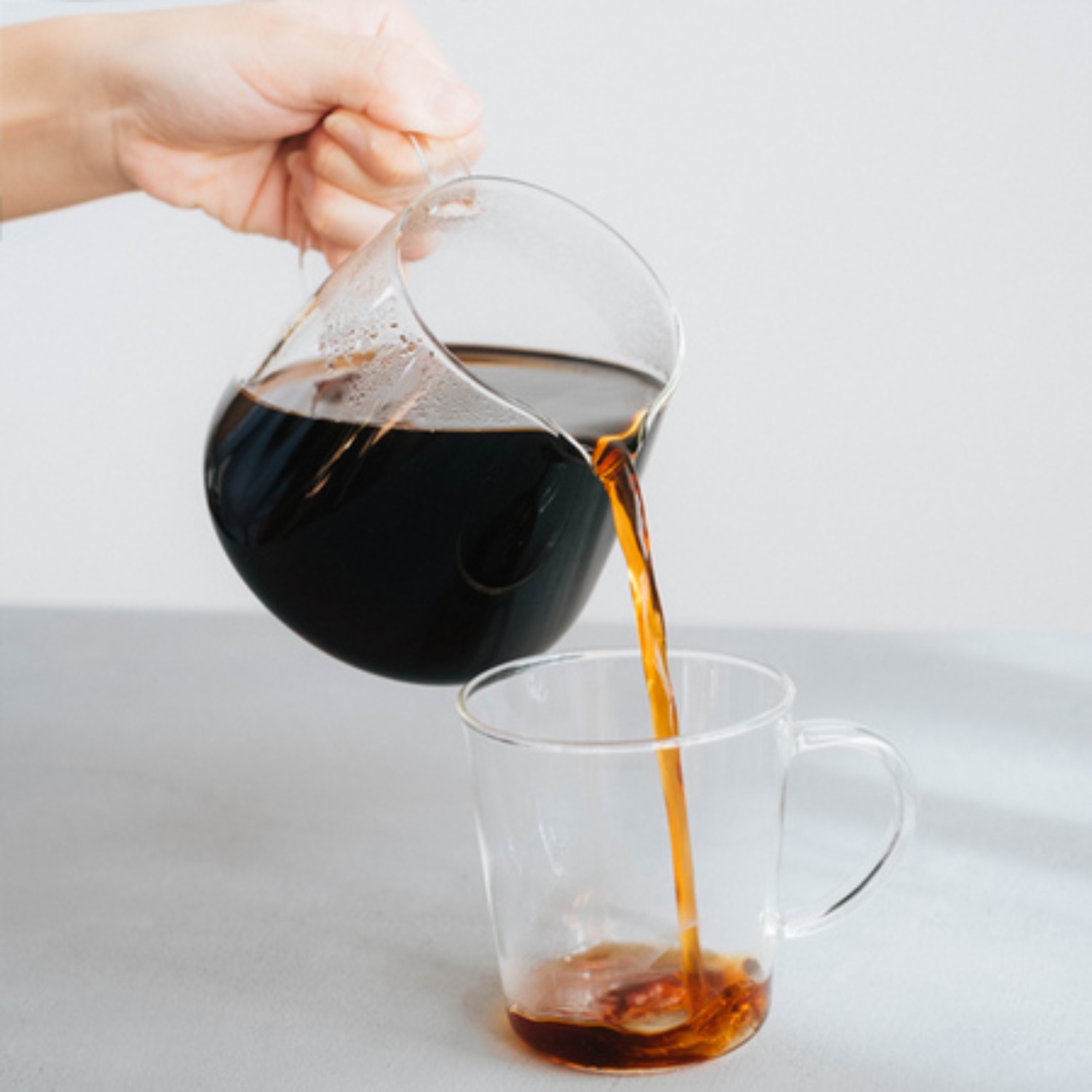
Lotus Water Drops
Creat your brew water
💧 Lotus Water Drops — Precision Water for Better Coffee
Great coffee starts with great water.
Lotus Water Drops are the easiest and most flexible way to dial in your brewing water — without powders, premixing, or complicated recipes.
At WB.coffee, we use Lotus Drops. Not just to improve water quality, but to understand it: how hardness, alkalinity, calcium, magnesium, and sodium each shape extraction, mouthfeel, and flavor clarity. The process is equal parts enlightening, humbling, and fun.
Whether you brew filter, espresso, or both — this is water control made practical.
☕ What are Lotus Water Drops?
Lotus Drops are concentrated mineral solutions that allow you to build your own coffee brewing water drop by drop. Start with distilled or reverse-osmosis (RO) water, add a few drops, and you’re ready to brew.
No boiling.
No dissolving powders.
No waste.
Just precision.
👃 Why we love it at WB.coffee (Coffee Nose insight)
Water is the most overlooked variable in coffee — until you taste the difference.
Why the Coffee Nose recommends Lotus Drops:
- 💧 Total control over hardness & alkalinity
- 🎯 Easy experimentation without commitment
- 🔬 Perfect for learning how minerals affect flavor
- ☕ Repeatable results across brewers and recipes
- 🌍 Ideal for hard-water regions (hello Netherlands)
This is one of the fastest ways to level up your brewing knowledge without changing beans, grinders, or gear.
🧠 Scott Rao recommendation & tips
Lotus Water Drops are strongly recommended by Scott Rao, who highlights them as one of the most practical tools for understanding and optimizing brewing water.
Scott emphasizes that:
- Small mineral changes can have huge flavor impact
- Calcium, magnesium, and alkalinity must be balanced
- Water should be adjusted for the coffee, not the other way around
Lotus Drops make this learning curve accessible — without lab equipment.
⚡ Quick user guide (starting point)
What you need:
- Distilled or RO water
- A scale (recommended ✔️)
- Lotus Water Drops
Basic workflow:
- Start with distilled or RO water
- Place your bottle on a scale
- Add drops according to your target recipe
- Swirl gently
- Brew & taste
- Adjust and repeat
💡 Pro tip from WB.coffee:
Change one variable at a time. Taste. Take notes. Your palate will learn fast.
🔬 Perfect for…
- Home brewers who want better coffee without buying bottled water
- Coffee lovers curious about extraction and flavor science
- Roasters who want to mimic client water profiles
- Anyone stuck with very hard tap water
- Workshops, tastings, and sensory training sessions
We regularly use Lotus Drops during cuppings, brewing workshops, and Coffee Omakase sessions at Amsterdam Coffee Lab.
⚠️ Good to know
- ❌ Glass bottle (450 ml) not included
- ✔️ We recommend using the Drops with a scale for accuracy
- ✔️ Compatible with all brew methods (filter, espresso, immersion)
🔗 Learn more & brew smarter
Pair Lotus Water Drops with:
- Tips from the Coffee Nose 👃 (water, extraction & brewing theory)
- Our brewing workshops & masterclasses at Amsterdam Coffee Lab
- Comparative tastings using different water profiles
Water isn’t just a background ingredient — it’s the stage your coffee performs on.
💧 Lotus Water Drops
Recipe Card & Water Science Basics
(Inspired by Scott Rao)
What’s in the kit?
A Lotus Water Drops kit contains four dropper bottles:
- Calcium Chloride (CaCl₂) → hardness
- Magnesium Chloride (MgCl₂) → hardness
- Sodium Bicarbonate (NaHCO₃) → alkalinity
- Potassium Bicarbonate (KHCO₃) → alkalinity
All ppm values below are expressed as CaCO₃ equivalent, the industry standard.
🧪 What do hardness & alkalinity do?
Hardness (GH – General Hardness)
Hardness comes mainly from calcium and magnesium.
It affects:
- sweetness
- structure
- mouthfeel
Too little → thin, sharp coffee
Too much → flat or dull coffee
Magnesium often enhances perceived sweetness and clarity more than calcium.
Alkalinity (KH – Carbonate Hardness)
Alkalinity buffers acidity.
- Too low KH → sour, unrefined coffee
- Too high KH → chalky, muted, flat
⚠️ Flavor effects are not linear.
Coffees can “pop” at both low and moderately high KH, while mid-range levels may taste dull.
💧 Drop impact reference
For 450 ml water
- 1 drop Ca → +10 ppm GH
- 1 drop Mg → +10 ppm GH
- 1 drop Na → +5 ppm KH
- 1 drop K → +5 ppm KH
For 1 gallon (~3.8 L)
- 5 drops Ca → +6 ppm GH
- 5 drops Mg → +6 ppm GH
- 5 drops Na → +3 ppm KH
- 5 drops K → +3 ppm KH
☕ Filter vs Espresso – Alkalinity insight
-
Filter coffee (≈1.2–1.4% TDS)
→ usually tastes best around 30–40 ppm KH -
Espresso (≈10% TDS)
→ may benefit from much higher alkalinity
→ sometimes 200–300 ppm KH gives fascinating results
Lotus Drops allow you to explore this easily — something traditional water systems can’t do.
🛡 Protecting your machines while experimenting
- Calcium causes scale
- Magnesium does NOT
👉 You can safely experiment with high hardness by:
- increasing magnesium
- keeping calcium moderate
This is why Lotus Drops are ideal for espresso experimentation without risking your machine.
⚡ Standard method (recommended)
- Start with distilled or RO water
- Place bottle on a scale
- Add drops according to recipe
- Swirl gently
- Brew & taste
✔ Distilled water is best
✔ RO water is second best
✔ Any water can be adjusted upwards
🧾 Proven filter coffee recipes
Lance Hedrick – Light & Bright
60 GH / 25 KH
Per 1 liter:
- 13 drops Calcium
- 11 drops Potassium
Per 1 gallon:
- 50 drops Calcium
- 42 drops Potassium
Rao / Perger Recipe
90 GH / 42 KH
(Developed with Dan Eils – Litmus Coffee Labs)
Per 1 liter:
- 7 drops Calcium
- 13 drops Magnesium
- 8 drops Sodium
- 11 drops Potassium
Per 1 gallon:
- 25 drops Calcium
- 50 drops Magnesium
- 30 drops Sodium
- 40 drops Potassium
👃 CoffeeNose Tip – Sodium & bitterness
Sodium reduces perceived bitterness.
👉 For:
- dark roasts
- robusta
- bitter espresso
…adding a bit more sodium bicarbonate can smooth the cup dramatically.
(Scott Rao jokes: “If you must drink dark-roast robusta, dump a salt shaker in it.”
Lotus Drops let you do this precisely, not recklessly.)
🔬 Advanced hack: reverse-engineer your perfect water
You can find your ideal water without brewing multiple times.
How it works
Coffee tastes the same whether minerals are added before or after brewing.
Method
- Brew 900 ml coffee with distilled water
- Stir well
- Divide into 4 × 225 ml cups
-
Add different drops to each cup
- 1 drop Ca or Mg → +20 ppm GH
- 1 drop Na or K → +10 ppm KH
- Stir & taste (blind if possible)
Example (fixed GH, changing KH)
- Cup 1: 1 Ca + 2 Mg + 1 Na → 60 GH / 10 KH
- Cup 2: 1 Ca + 2 Mg + 2 Na + 1 K → 60 GH / 30 KH
- Cup 3: 1 Ca + 2 Mg + 3 Na + 2 K → 60 GH / 50 KH
- Cup 4: 1 Ca + 2 Mg + 4 Na + 3 K → 60 GH / 70 KH
💡 Start with big differences (10 / 50 / 100 / 150 KH), then fine-tune.
☕ Why we teach this at WB.coffee
At Amsterdam Coffee Lab, Lotus Water Drops are one of the fastest ways to:
- understand extraction
- taste water chemistry effects clearly
- level up brewing intuition
They are a core tool in our:
- brewing workshops
- Coffee Omakase tastings
- water & extraction deep dives