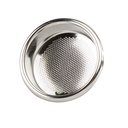
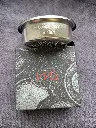
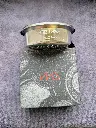
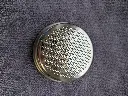
IMS Competition B70TH24.5M – Precision Espresso Basket – 12–18 g
☕ A Versatile Precision Basket for Smaller Doubles to Full Espresso Recipes
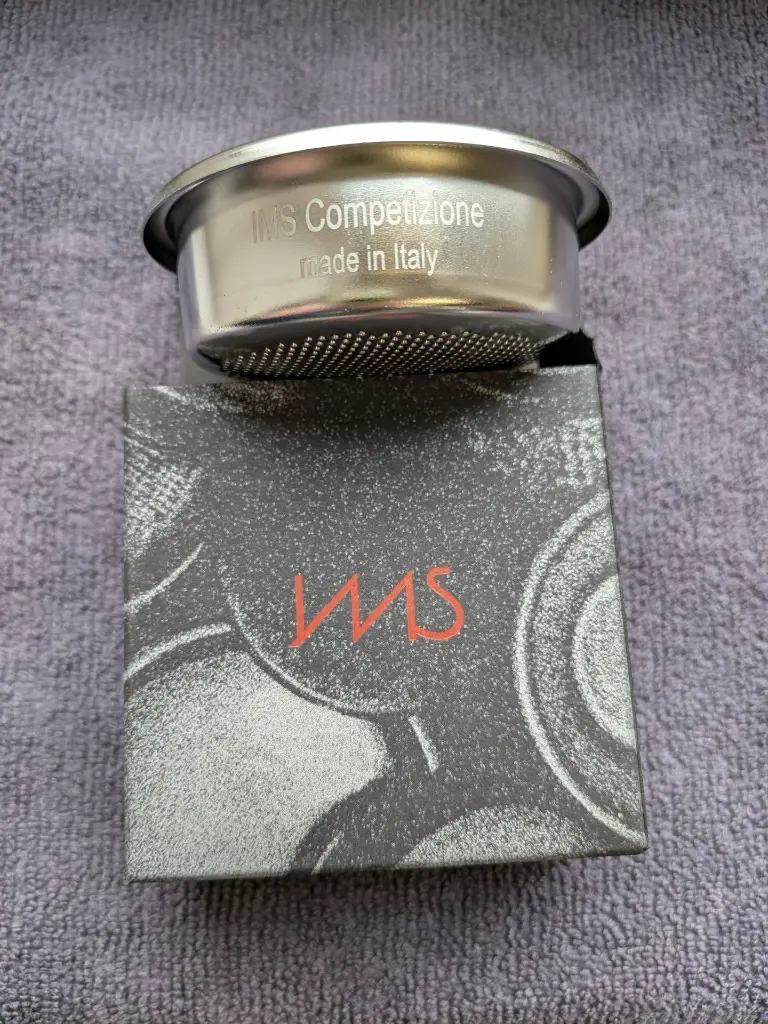
The IMS Competition B70TH24.5M is one of our favourite all-round precision baskets for 58 mm espresso machines.
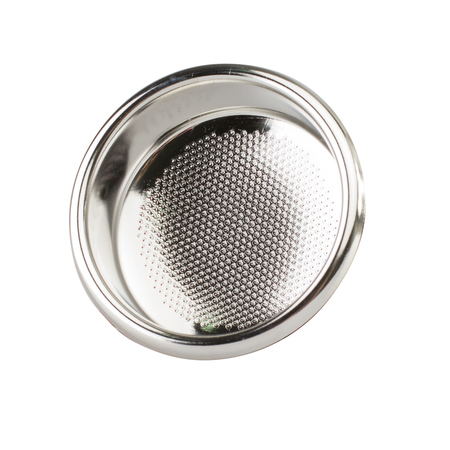
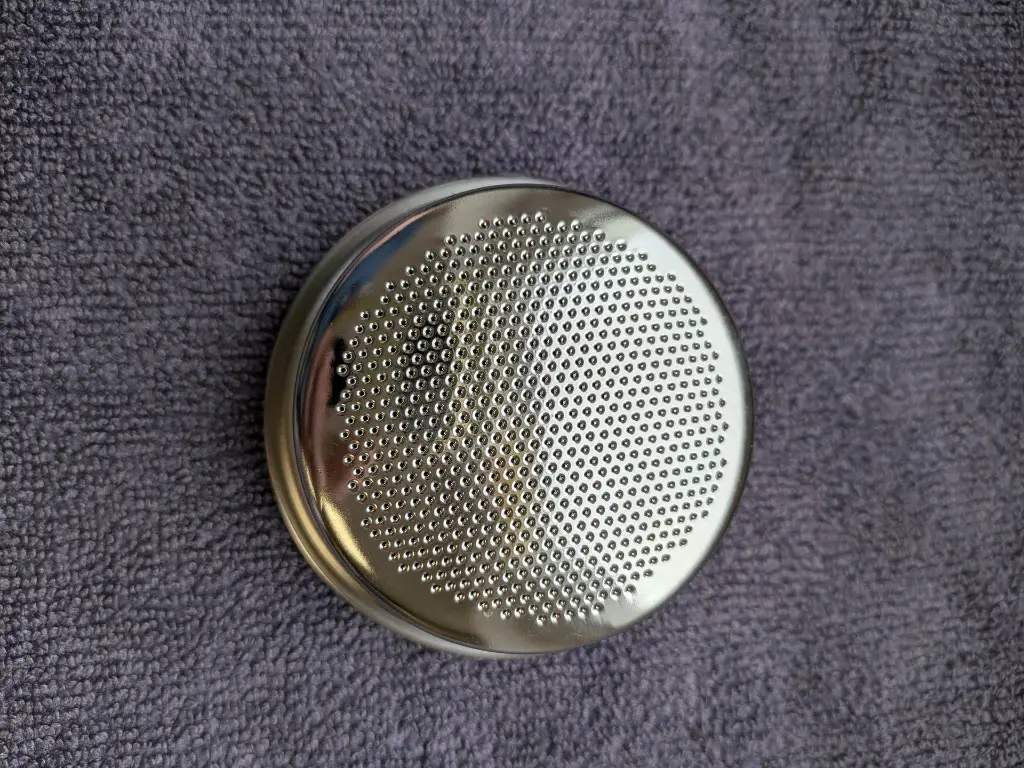
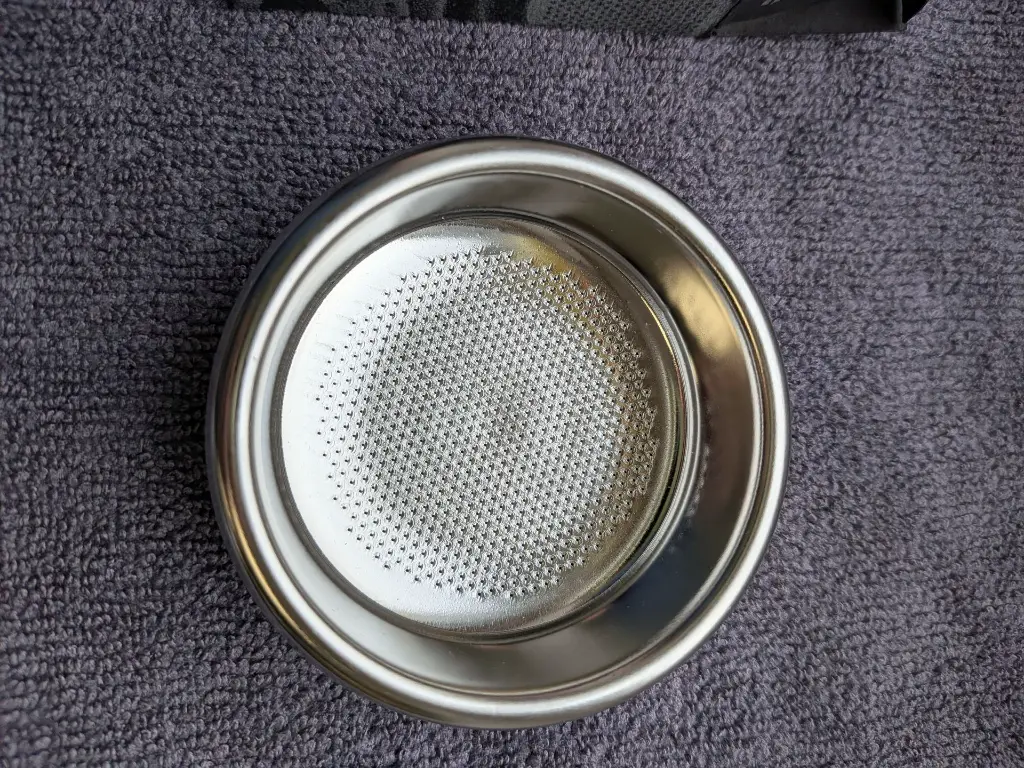
Its 24.5 mm height, flat bottom with rounded internal corners, and concentrated 641-hole M-pattern give it enough flexibility for everything from smaller home-barista double shots to more generous modern espresso recipes.
At WB.coffee we position it as a practical:
12–18 g espresso basket
for everyday use.
But coffee density matters.
A fluffy dark roast occupies considerably more basket volume than a dense light-roasted coffee, so the same basket can sensibly work with substantially different weights depending on the coffee.
That is why we prefer to talk about:
CoffeeNose 👃 recommended dose ranges
rather than pretending that one number printed on a basket applies to every coffee.
📋 Quick Menu
- 🧺 IMS Competition B70TH24.5M
- ☕ Practical WB.coffee range: 12–18 g
- 📏 Height: 24.5 mm
- ⭕ Border: Ø70 mm
- 🔘 Tamper: 58 / 58.4 mm
- ⬜ Flat bottom
- ↪️ Rounded internal corners
- 💧 641 precision holes
- 🎯 Concentrated M-pattern
- 🔬 0.30 mm perforations
- 🔘 External retention ridge
- 🫘 Suitable for dark, medium & light roast recipes
- 🧲 Excellent with a 58.5 mm puck screen
- 🌀 Compatible with Duomo & MHW-3BOMBER WDT workflows
- 🔨 Precision spring tamper recommended
- 🧼 Compatible with professional automatic portafilter-cleaning workflows
- 👃 CoffeeNose dose & headspace guidance
- 🏢 Café recipe & workflow consulting
- 💶 Bulk pricing from 2 baskets
⬜ Flat Bottom with Rounded Internal Corners
The B70TH24.5M differs fundamentally from the convex IMS B70 2TC H24 E.
This basket has a:
flat bottom
combined with:
rounded internal corners
where the basket wall transitions into the bottom.
IMS describes this rounded internal geometry as concentrating extraction toward the useful central portion of the coffee puck while avoiding poorly utilised coffee around sharp basket corners.
The result is a geometry that feels more conventional than the convex H24 E, while still being distinctly different from a basic stock basket.
💧 641-Hole M-Pattern
The bottom uses:
641 precision holes
arranged in IMS's concentrated:
M-pattern
within approximately:
Ø44 mm
of the basket floor.
IMS specifies a 0.30 mm hole diameter, with the complete perforated area contained within the Ø49 mm basket extraction zone.
The M-pattern deliberately places a greater concentration of openings toward the central area of the puck.
This combines well with the basket's rounded internal corners to encourage controlled central extraction.
⚖️ CoffeeNose 👃 Recommended Dose Ranges
There is no genuinely universal gram rating for an espresso basket.
Coffee volume changes with:
🫘 Density
🔥 Roast development
⚙️ Grind size
🌱 Variety
💨 Bean porosity
📏 Desired headspace.
Our practical recommendations for the B70TH24.5M are:
☕ Smaller double / home-barista recipe
12–16 g
Useful when you deliberately want a lower coffee dose.
We strongly recommend checking headspace and considering a puck screen in this range.
🔥 Dark roast
12–16 g
This is probably the basket's natural sweet spot for many traditional espresso blends.
Dark-roasted beans are relatively expanded and porous, so they occupy more basket volume per gram.
☕ Medium roast
15–17 g
A very useful range for contemporary espresso blends and medium-roasted specialty coffee.
🌸 Light roast
16-19 g
Dense light-roasted coffee occupies less volume per gram.
Consequently, substantially more coffee by weight can fit while retaining sensible puck depth and headspace.
These CoffeeNose ranges align with the physical capacity behaviour documented for this basket geometry by IMS, but we prefer to present them as practical brewing guidance rather than absolute rules.
👃 CoffeeNose – Why We Still Call It a 12–18 g Basket
Because that is how we expect most WB.coffee customers to use it.
For:
☕ Home espresso
🥛 Cappuccino
🤎 Flat white
🍫 Medium and darker blends
a working range somewhere between:
12 and 18 g
covers an enormous amount of useful territory.
The higher light-roast recommendations don't contradict that.
They demonstrate why:
basket capacity should be judged by puck volume, not grams alone.
A dense 21 g light-roast puck may occupy similar physical space to 17 g of a developed espresso roast.
📏 Headspace Matters
A precision basket works best when the puck fits the brewing chamber correctly.
Too much coffee can force the dry puck against:
🚿 the shower screen
🔩 the group screw
before brewing even begins.
Too little coffee can create excessive:
↕️ headspace
and a shallow puck that is more vulnerable to disruption when the group fills with water.
So don't chase:
maximum grams
or:
minimum grams.
Choose the dose that creates a sensible puck for:
your coffee + grinder + basket + espresso machine.
🧲 Smaller Dose? We Recommend a Puck Screen
For home baristas deliberately using this basket for smaller double shots around:
12–15 g
we particularly like using a:
58.5 mm puck screen
provided your machine has enough clearance.
Why?
A puck screen can:
💧 soften and distribute incoming water
🛡️ protect the surface of a shallower puck
🧼 keep the shower screen cleaner
♻️ reduce coffee residue reaching the group
📏 occupy a small amount of otherwise unused headspace.
This makes it particularly attractive when using a 24.5 mm basket at the lower end of its dose range.
⚠️ A Puck Screen Is Not a Fix for Extreme Underdosing
There is an important distinction.
A puck screen can make a sensible smaller-dose recipe work beautifully.
It does not magically turn:
far too little coffee
into:
the correct basket size.
If the puck is extremely shallow, choose a shallower basket instead.
Think of the puck screen as:
a useful brewing and cleanliness tool
rather than a spacer whose job is to compensate for an inappropriate basket.
🌀 Puck Preparation Matters
Once you move from a generic stock basket to a precision basket, puck preparation becomes more—not less—important.
Precision baskets provide relatively predictable water flow through the bottom.
That means inconsistencies higher in the puck can become easier to expose.
You still need to control:
⚖️ Dose
⚙️ Grind
🌀 Distribution
🔘 Tamping
📏 Headspace.
A precision basket cannot repair:
❌ Large clumps
❌ Uneven density
❌ Crooked tamping
❌ Poor grinder alignment.
👃 CoffeeNose Puck Preparation Workflow
Our preferred home-barista workflow:
1. Grind accurately
Use a grinder capable of producing a consistent espresso grind.
2. Dose consistently
Weigh the coffee.
3. Distribute
Use WDT to break up clumps and distribute grounds through the puck.
4. Tamp
Use a level, repeatable tamp.
5. Add puck screen where appropriate
Especially useful for lower-dose recipes.
6. Brew by ratio
Measure beverage weight.
7. Taste
Then change only one variable at a time.
🌀 Compatible with DUOMO The Eight WDT
The B70TH24.5M is a 58 mm-class basket and works very naturally with:
DUOMO The Eight
The Eight is designed around 58 mm portafilters and offers adjustable needle depth, making it suitable for different basket depths and coffee doses.
That adjustability matters here because the B70TH24.5M can be used across a very broad dose range.
Set the needles so they distribute:
through the coffee bed
rather than simply scratching the surface.
For very small 12–14 g doses, take particular care to set the needle depth appropriately for the lower puck height.
🌀 Compatible with MHW-3BOMBER Cyclone WDT
Another excellent pairing is the:
MHW-3BOMBER specifically designs this tool for 58 mm baskets and gives it adjustable stirring depth so it can be matched to different:
🧺 Basket sizes
⚖️ Coffee doses.
Its magnetic base helps locate the tool on the basket while the adjustable needle system distributes coffee throughout the puck.
For a basket as versatile as the H24.5M, adjustable-depth WDT makes much more sense than a fixed tool designed around one single puck height.
🔨 Finish with a Precision Spring Tamper
After distribution we recommend:
a precision spring tamper
around:
58.4–58.5 mm
for a close edge-to-edge fit in IMS 58 mm baskets.
IMS itself recommends precision tampers around this diameter for its 58 mm precision basket platform.
A spring-loaded tamper offers two practical advantages:
🎯 More repeatable force
📐 Easier level tamping.
For home baristas, consistency matters far more than trying to achieve an arbitrary heroic tamp pressure.
Once the coffee is fully compressed:
additional force doesn't improve extraction.
A repeatable, level tamp does.
🆚 B70TH24.5M vs B70 2TC H24 E
These are close in height.
They are not the same basket.
⬜ B70TH24.5M
Flat bottom with rounded internal corners
Choose it for:
✔️ Broad dose flexibility
✔️ Practical 12–18 g home use
✔️ 16–18 g darker espresso
✔️ Larger medium/light-roast recipes
✔️ M-pattern extraction
✔️ More conventional puck geometry.
🥣 B70 2TC H24 E
Convex bottom
Choose it for:
✔️ Smaller practical doses
✔️ 12–16 g recipes
✔️ Ridgeless design
✔️ 715-hole E-pattern
✔️ Distinct convex extraction geometry.
CoffeeNose choice 👃
Want maximum versatility?
H24.5M
Want the smaller convex IMS?
H24 E
🆚 B70TH24.5M vs VST 15 g
The VST 15 g is a more narrowly focused basket.
VST positions it around:
14–16 g
and puts particular emphasis on extremely controlled manufacturing tolerances and individual basket inspection.
The IMS H24.5M gives you:
more dose flexibility.
The VST 15 g gives you:
a tighter reference dose and QC philosophy.
For a home barista who may want to brew:
14 g today
and:
18 g tomorrow,
we would normally choose:
IMS B70TH24.5M
For a café wanting several tightly matched dedicated 15 g baskets:
VST
becomes very attractive.
📊 Which Basket Should I Choose?
| | IMS H24 E Convex | IMS H24.5 M Flat | VST 15 g |
| WB.coffee positioning | 12–18 g | 12–18 g | 14–16 g |
| Height | 24 mm | 24.5 mm | 22 mm |
| Bottom | Convex | Flat | Flat / VST geometry |
| Internal corners | Convex transition | Rounded | VST geometry |
| Pattern | E | M | VST proprietary |
| Holes | 715 | 641 | Individually QC measured |
| Perforation area | Ø49 mm | Ø49 mm / M area Ø44 mm | Controlled open area |
| Ridge | Ridgeless | External ridge | Ridged or ridgeless |
| Tamper | 58 / 58.4 mm | 58 / 58.4 mm | 58.4 mm flat |
| Main strength | Convex extraction geometry | Versatility | Tight QC / repeatability |
| Best for | Bottomless / geometry experimentation | Everyday home & café use | Dedicated calibrated 15 g workflow |
IMS confirms the H24 E's convex 715-hole design and the H24.5M's rounded-corner 641-hole M geometry. VST specifies its 15 g EU basket at 14–16 g, 22 mm high, with a 58.4 mm flat-face tamper.
☕ Starting Recipe – Straight Espresso
For medium / medium-dark specialty espresso:
Dose
17 g
Beverage
34–38 g
Ratio
Approximately 1:2–1:2.25
Use extraction time as diagnostic information.
Then taste.
A straight espresso recipe should prioritise:
✨ Sweetness
🍋 Balanced acidity
👅 Texture
🌰 Finish
rather than simply hitting a predetermined number of seconds.
🤎 Recipe Direction – Flat White
For flat white we usually want enough concentration to remain clearly identifiable through milk.
A good starting direction:
Dose
17–18 g
Espresso
32–38 g
This gives you a relatively concentrated espresso base while still allowing:
🍫 sweetness
🌰 body
🍮 caramel character
to remain present through a smaller milk drink.
🥛 Larger Milk Drinks
A larger:
☕ Cappuccino
🥛 Latte
🥤 Large flat white-style drink
may benefit from either:
- a slightly larger dose
- a slightly shorter beverage ratio
- a more developed espresso roast
- a blend engineered to retain intensity through milk.
This is where simply copying the same espresso recipe for every drink often produces mediocre results.
🏢 We Help Coffee Bars Build the Complete Recipe
For cafés, choosing the basket is only the beginning.
At Amsterdam Coffee Lab / WB.coffee, we help coffee bars optimise the complete espresso system:
Basket
Which volume and geometry matches the intended drink?
⬇️
Coffee
Single origin or blend?
⬇️
Grinder
Which grind range gives the required flow and flavour?
⬇️
Dose
How much coffee fits the basket and recipe?
⬇️
Beverage ratio
How much espresso should reach the cup?
⬇️
Puck preparation
WDT, distribution, tamping and consistency.
⬇️
Workflow
How quickly and repeatably can the barista execute it during service?
👃 One Espresso Recipe Does Not Suit Every Drink
A straight espresso may taste fantastic at:
18 g → 42 g.
Put that same espresso into a:
300 ml milk drink
and it may disappear.
Conversely, an intense:
18 g → 30 g
blend-based espresso can be excellent in milk but overly concentrated as a straight espresso.
We help cafés develop recipes specifically for:
☕ Straight espresso
🤎 Flat white
🥛 Cappuccino
🥤 Larger milk drinks
rather than assuming one recipe is perfect for everything.
🌍 Single Origin vs Blend
Basket and recipe choice also depend on the coffee.
🌍 Single origin
May benefit from:
🌡️ Higher temperature
☕ Longer beverage ratio
⚙️ Different grind
⚖️ Higher dose for very dense light roast
to maximise:
🌸 Aroma
🍓 Fruit
✨ Clarity.
🍫 Espresso blend
May instead be designed around:
🌰 Body
🍫 Chocolate
🍮 Caramel
🥛 Milk compatibility
and perform beautifully at a shorter, more concentrated ratio.
The basket is only one component of that recipe.
🧼 Compatible with Kaffee Klar Portafilter Cleaning
For commercial coffee bars, the B70TH24.5M can be integrated into an automated cleaning workflow with systems such as:
Kaffee Klar T1
Kaffee Klar supports 58 mm single and double portafilters and offers dedicated cleaning heads, including heads designed for flat-bottom double baskets.
For this IMS basket, use the cleaning-head geometry appropriate to the flat-bottom basket.
The system can remove spent grounds in approximately:
3 seconds
without repeatedly banging the portafilter against a knock box.
That can mean:
🔇 Less noise
🧹 Cleaner bar
⚡ Faster workflow
🖐️ Less repetitive impact on the barista.
🧼 Compatible with QuinSpin Workflows
The QuinSpin automatic portafilter cleaner is another excellent café workflow option.
QuinSpin uses:
- A drill-style head to remove the bulk of the puck.
- A brush head to remove remaining coffee particles.
It is designed around double espresso baskets, with cleaning heads matched to specific basket geometry.
When ordering or configuring QuinSpin for the B70TH24.5M:
choose the cleaning head for the correct basket geometry.
That matters because QuinSpin's drill head is deliberately matched to the basket rather than using one generic shape for everything.
👃 Why Automatic Basket Cleaning Matters
A café might produce:
200
300
or:
500+
espresso pucks per day.
Saving only a few seconds per puck becomes meaningful.
But workflow speed isn't the only advantage.
Removing spent coffee consistently also helps prevent:
☕ old grounds
🟤 residue
🧈 oxidised coffee oils
remaining in the basket before the next dose.
Clean basket.
Fresh dose.
Repeat.
🧼 Deep Cleaning Still Matters
Automatic puck removal does not replace proper chemical cleaning.
During service:
🧹 remove the puck.
Periodically:
🧼 remove coffee oils.
Rinse baskets with hot water regularly and use a suitable:
espresso & coffee-oil cleaner
when required.
Browse our:
espresso baskets
for alternative sizes and geometries.
🫘 Find the Right Espresso
For milk drinks, try:
CN – Chocolaty & Nutty
with:
🍫 Milk chocolate
🌰 Nuts
🍮 Caramel
🍯 Brown sugar.
Or:
VC – Vanilla & Caramel
for a softer, sweeter profile.
Not sure what you like?
Start with our:
Espresso Tasting Set.
🎓 Want to Make Better Espresso?
At Amsterdam Coffee Lab in Weesp, we teach you to connect:
⚙️ Grind
⚖️ Dose
🧺 Basket
📏 Headspace
🌀 WDT
🔨 Tamping
💧 Beverage ratio
⏱️ Flow
👅 Taste.
Choose from:
🎓 Espresso Essentials for the Home Barista
🧪 Advanced Barista Masterclass
🏠 Private home training
🏢 Office training
☕ Professional café consulting.
The goal is not to copy our recipe.
It is to understand how to build:
your recipe.
For cafés we strongly prefer keeping:
matched basket geometry
across multiple portafilters.
That makes it much easier to transfer:
⚙️ Grinder setting
⚖️ Dose
☕ Beverage ratio
from one group to another.
🔧 Technical Specifications
Product: IMS Competition Precision Basket
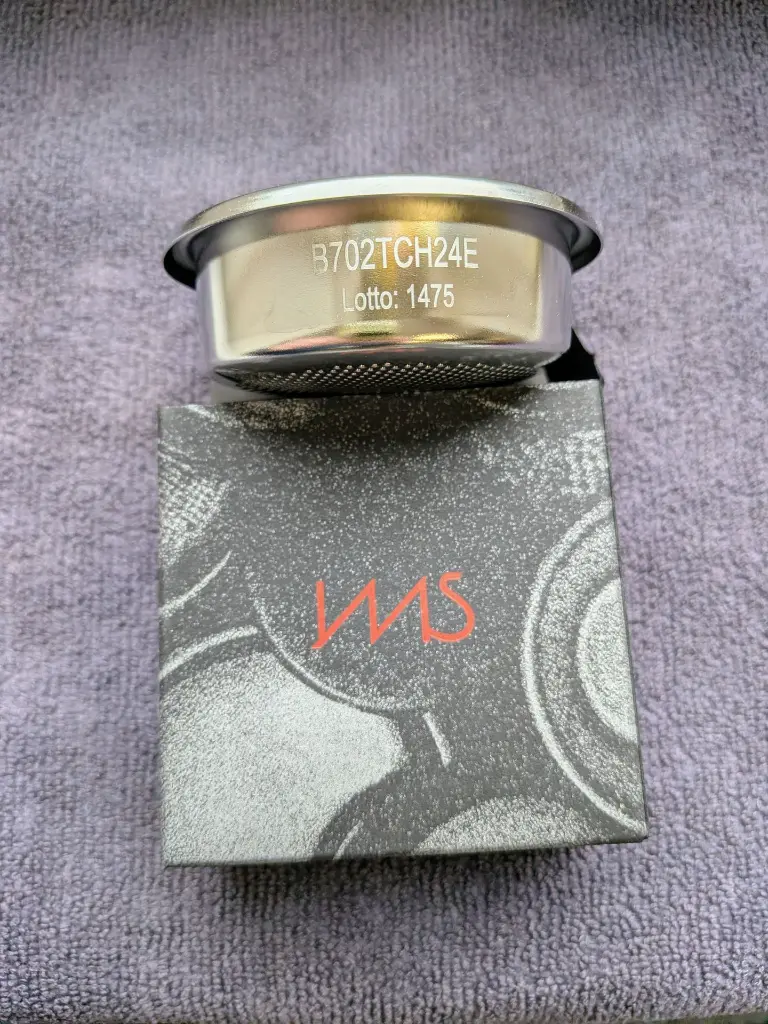
Model: B702TH24.5M
Type: 2-cup / double basket
WB.coffee practical range: 12–18 g
Geometry: Flat bottom with rounded internal corners
Height: 24 mm
Border: Ø70 mm
Internal body: Approx. Ø59 mm
Tamper: 58 / 58.4 mm
Ridge: External Ø60.5 mm
Hole pattern: M-pattern
Number of holes: 641
Concentrated pattern area: Ø44 mm
Perforated basket area: Approx. Ø49 mm
Hole diameter: Approx. 0.30 mm.
👃 CoffeeNose Recommended Doses
Smaller double
12–16 g
Use sensible headspace and consider a puck screen.
Dark roast
12–16 g
Ideal for many classic espresso blends and milk drinks.
Medium roast
16–18 g
Excellent general specialty-espresso range.
Light roast
17–19 g
Dense coffees can fit considerably more mass into the same basket volume.
These are starting ranges—not rules.
Always verify:
actual puck height and flavour.
✅ Perfect For
The IMS B70TH24.5M is particularly suited to:
✔️ 58 mm espresso systems
✔️ E61-style machines
✔️ Home baristas
✔️ Specialty cafés
✔️ 12–18 g everyday espresso
✔️ Smaller doubles with puck screen
✔️ Medium and dark espresso blends
✔️ Higher-dose dense light roasts
✔️ WDT workflows
✔️ Precision spring tampers
✔️ Bottomless portafilters
✔️ Automated café portafilter cleaners
✔️ Recipe-development and training environments.
❤️ Why We Like It at WB.coffee
This is probably one of the more versatile IMS basket sizes.
The B70TH24.5M gives you enough volume to explore modern espresso while still allowing sensible smaller-dose recipes.
Its:
⬜ flat bottom
↪️ rounded internal corners
💧 concentrated 641-hole M-pattern
📏 24.5 mm depth
create a very useful middle ground.
For home baristas, we especially like the combination:
smaller dose + good WDT + precision spring tamper + puck screen.
For cafés, the same basket can form part of a much more developed workflow incorporating:
🌀 DUOMO / MHW-3BOMBER distribution
🔨 repeatable tamping
🧼 Kaffee Klar / QuinSpin cleaning
⚖️ weight-controlled recipes
☕ drink-specific beverage ratios.
CoffeeNose verdict 👃
Don't ask:
“How many grams is this basket?”
Ask:
“How many grams of this coffee give me the correct puck volume and the espresso I want?”
For a dark espresso blend that might be:
12–16 g.
For a medium roast:
15–17 g.
For a dense light roast:
17–19 g.
And if you're a home barista deliberately making a smaller:
12–15 g double,
use good puck preparation and consider a thin puck screen to make the most of the additional headspace.
Basket size is only the beginning.
The real recipe is:
coffee → grinder → dose → distribution → tamp → basket → yield → milk → workflow → taste.
📍 IMS Precision Baskets & Espresso Workflow in Weesp
At WB.coffee / Amsterdam Coffee Lab in Weesp, combine your IMS basket with:
🌀 DUOMO & MHW-3BOMBER WDT tools
🔨 Precision spring tampers
🧲 Puck screens
🥤 Dosing cups
⚖️ Espresso scales
🪞 Bottomless portafilters
🧼 Kaffee Klar & QuinSpin café workflow solutions
🧽 Professional espresso-oil cleaners
⚙️ Espresso grinders
🫘 Fresh espresso blends & single origins
🎓 Home Barista workshops
🧪 Advanced Masterclasses
🏢 Café workflow & recipe consulting
🥡 Specialty coffee from the tasting menu @ Amsterdam Coffee Lab
From basket selection to the final drink:
we help you build the complete espresso recipe.